
What Is Landscape Lighting?
Landscape lighting in Portland, OR is exterior lighting placed at ground level rather than along the roof. Fixtures are positioned around walkways, planting beds, trees and garden features to shape how the yard looks and feels at night.
This is the one service here that lives away from the house itself. That makes design intent, rather than hardware, the part worth getting right.
Who Is This Service For?
This service suits homeowners who spend time outdoors after sunset, or want the yard to look considered from the street.
- Homeowners with dark paths or steps
- Gardeners with plantings worth showing off
- Regular outdoor entertainers
- Owners already planning a roofline system
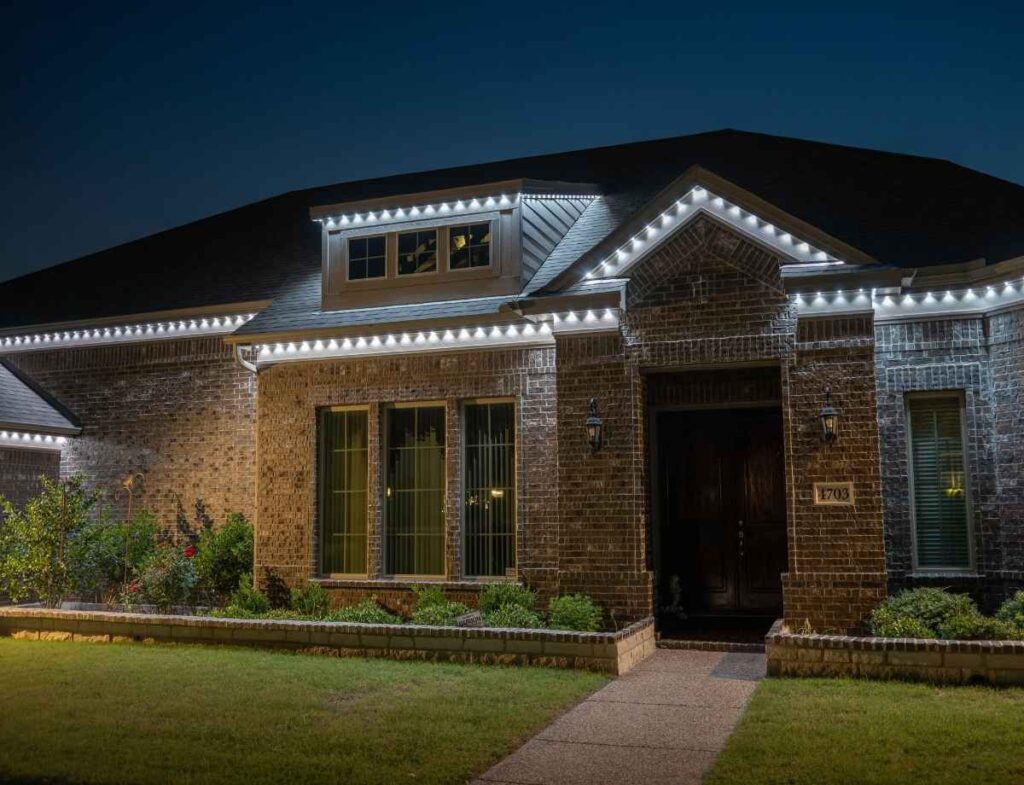
What to Expect From a Landscape Lighting Design
Design comes before fixtures. A walk of the yard establishes how you actually use it, which routes matter at night, and which features deserve attention.
From there the layout is built around those answers. The aim is a yard that looks natural after dark, not a row of evenly spaced lights.
The Areas of the Yard Worth Lighting
Most designs draw on some combination of these areas.
Walkways and paths
Low-level light along a route makes the edges of a path readable at night.
Steps and level changes
Lighting a change in height is one of the most practical decisions in any yard.
Planting beds
Gentle light across beds gives depth to areas that otherwise disappear after sunset.
Trees and specimen plants
A mature tree lit from below can become the anchor of the whole yard.
Garden features
Water features, seating areas and structures can be picked out rather than lost in shadow.
Entry and approach
Light along the approach to the front door makes arriving feel straightforward for guests.
How the Design Process Runs
Getting from an idea to an installed system follows a simple path.
A conversation about use
How you move through the yard and where you spend evenings shapes the plan.
A walk of the grounds
Seeing the yard in person surfaces details that photographs and satellite views miss.
A design proposal
You see the intended layout and the thinking behind each placement before work begins.
Professional installation
Fixtures are placed and finished by installers rather than left as a DIY project.
Ongoing local support
Adjustments and additions can be handled later as plantings grow and needs change.
How Landscape Lighting May Improve Both Safety and Appearance
Two things tend to improve at once. A yard that is easier to navigate at night is usually also a yard that looks better from the street.
Neither benefit requires a dramatic amount of light. Restraint is often what makes a landscape design feel professional.
What a Landscape Design Is Meant to Change
These are the changes a considered design is meant to make once it is in place.
Safer footing at night
Lit paths and steps may reduce the guesswork of moving through the yard after dark.
A more usable evening yard
Outdoor seating areas stay comfortable to use well past sunset.
Depth and dimension
Layered ground-level light may give the yard a depth that a single floodlight cannot.
A stronger arrival
A lit approach makes the front of the home feel welcoming to visitors.
Curb appeal after dark
Plantings and features you invested in stay visible once the sun goes down.
Landscape Lighting at Permanent Lighting PDX
Ground-level design works best when it is planned alongside the rest of the exterior. Landscape lighting here is treated as a companion to the permanent roofline system, so the two read as one scheme rather than two separate ideas.
Professional installation and local support apply to landscape work as they do to every service. Adjustments, additions and service are handled locally, which matters in a yard that keeps changing as it grows.
Frequently Asked Questions
What parts of a yard are usually included in a landscape lighting design?
Walkways, steps, planting beds, mature trees and garden features are the most common starting points. The right mix depends on how you use the yard and which routes matter after dark. A walk of the grounds is the fastest way to settle it.
How much does landscape lighting cost in Portland, OR?
Every yard is different, so pricing is quoted after a free design consultation rather than from a price list. Size, layout, the number of areas you want lit and the complexity of the grounds all affect the figure. You get a clear quote once the design is agreed.
Can landscape lighting be installed alongside a permanent roofline system?
Yes, and planning both together usually produces a better result. The roofline handles the outline of the home while ground-level lighting handles the approach and the garden. Designing them at the same time keeps the two consistent rather than mismatched.
How do you decide where each fixture goes?
Placement follows how the yard is used and what deserves attention. Routes people walk at night come first, then the features worth highlighting, then the areas that simply need depth. The aim is light that feels natural rather than uniform spacing for its own sake.
Can I see the landscape lighting design before any work starts?
Yes, the plan is shared with you before a single fixture is installed. A walk of the grounds comes first, then a proposal showing where each light would sit and why. Nothing goes in the ground until the layout is one you are happy with.
Bring Your Yard Into the Evening
A yard you invested in should not disappear at sunset. A free consultation is the simplest way to see what ground-level lighting could do for yours.