Modern Outdoor Lighting Ideas for Front of House
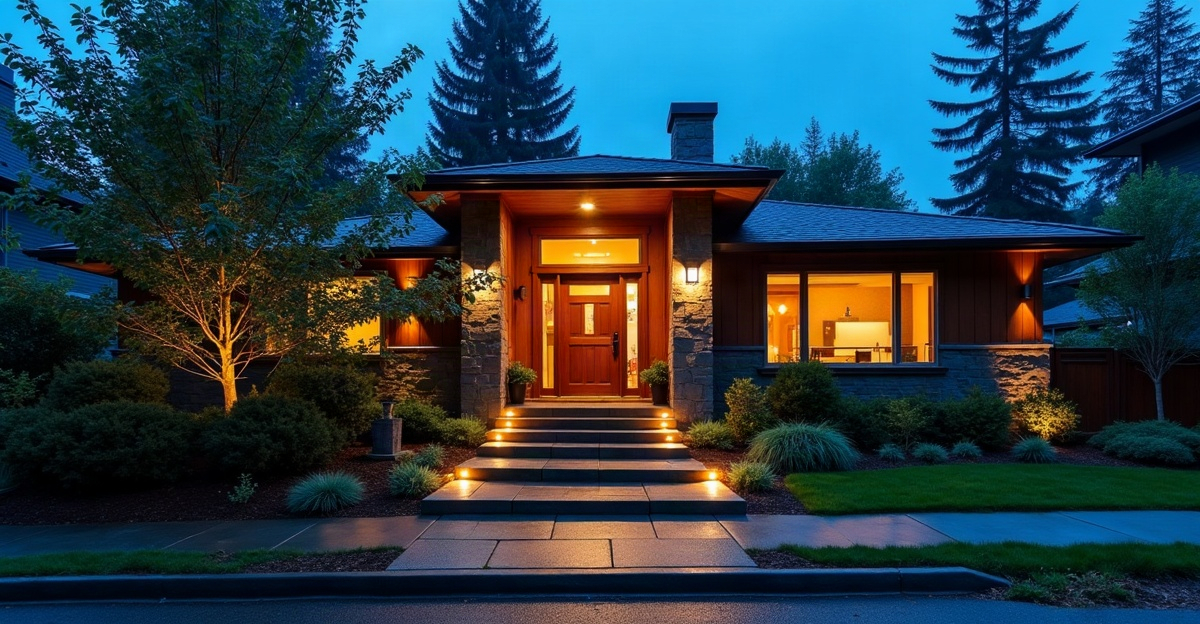
Modern front-of-house lighting works best when we combine welcoming ambient light, practical task lighting, and focused architectural accents. A thoughtful plan improves entry visibility, highlights key features, and gives us flexible control for daily use, seasonal displays, and changing weather.
Key Takeaways
- We prioritize the front door, house numbers, walkways, steps, driveway transitions, and uneven surfaces for safe, clear movement.
- We use coordinated fixtures, warm white light, controlled beam angles, and balanced placement to create a clean, modern look without glare.
- We add accent lighting with purpose to highlight architectural details, trees, stonework, soffits, or rooflines without lighting every surface.
- Smart controls, dimmers, schedules, and motion sensors help us manage brightness, limit wasted energy, and create useful lighting scenes.
- We choose weather-rated, corrosion-resistant fixtures for Pacific Northwest conditions. We recommend professional installation for permanent systems, challenging rooflines, and hardwired electrical work.
Create a Layered Lighting Plan That Improves Curb Appeal and Visibility
Modern outdoor lighting ideas for the front of a house should guide guests, define architecture, improve nighttime visibility, and create a polished first impression. A single bright fixture rarely delivers all of those results.
The strongest modern outdoor lighting ideas for the front of a house use layers, with each layer serving a clear purpose. Ambient lighting creates a welcoming overall glow. Task lighting supports locks, doorbells, steps, walkways, driveway transitions, and house numbers. Accent lighting draws attention to architectural details, trees, stonework, columns, gables, and textured siding. Decorative or programmable lighting adds flexibility for holidays, events, game days, and seasonal displays.
We recommend a restrained lighting plan. Modern front-of-house outdoor lighting should make the property easier to approach, enjoy, and recognize after dark without flooding every surface with light. Controlled placement creates curb appeal, safer navigation, and a more comfortable outdoor setting.
Front-of-House Planning Checklist
Before choosing fixtures, we review the property from several viewpoints:
- Identify the front door as the main visual focal point.
- Light house numbers so guests, deliveries, and emergency services can find the address.
- Prioritize paths, steps, uneven surfaces, and changes in elevation.
- Coordinate fixture finishes and design language across the entry and garage.
- Use a consistent everyday warm white-light appearance.
- Add architectural and landscape accents selectively.
- Test the design from the sidewalk, driveway, street, and inside the home.
An annotated lighting plan can divide the façade into entry, garage, pathway, landscape, address, soffit, and roofline zones. This approach helps us place each fixture where it has a clear job to do.
Modern Entry, Garage, Driveway, and Walkway Lighting Ideas
Modern front-entry lighting starts at the door. Symmetrical sconces work well when the doorway and façade support balanced placement. Covered porches can accommodate a pendant fixture, while lower porch ceilings often look cleaner with a flush-mount fixture. Door-adjacent lighting should illuminate the lock, bell, and threshold without creating harsh glare in the face.
Illuminated or well-lit house numbers are a practical upgrade. They improve address visibility and help the entire entry feel intentional after dark.
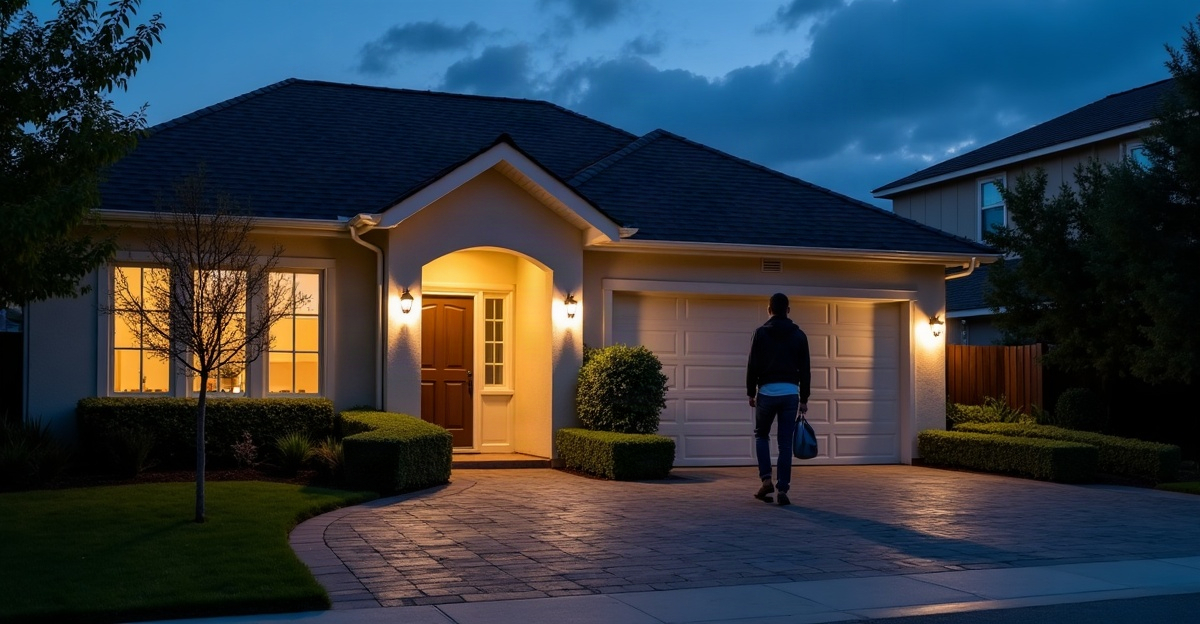
Modern garage exterior lighting should relate to the entry rather than look like an unrelated addition. Wall-mounted fixtures around garage doors can frame the façade, while downlighting near the driveway helps define arrival areas and transitions. Contemporary homes often benefit from simple geometric fixtures. Carriage-style garages may look better with updated fixtures that retain a classic profile. Matching the finish, scale, and color temperature to the entry creates a unified front elevation.
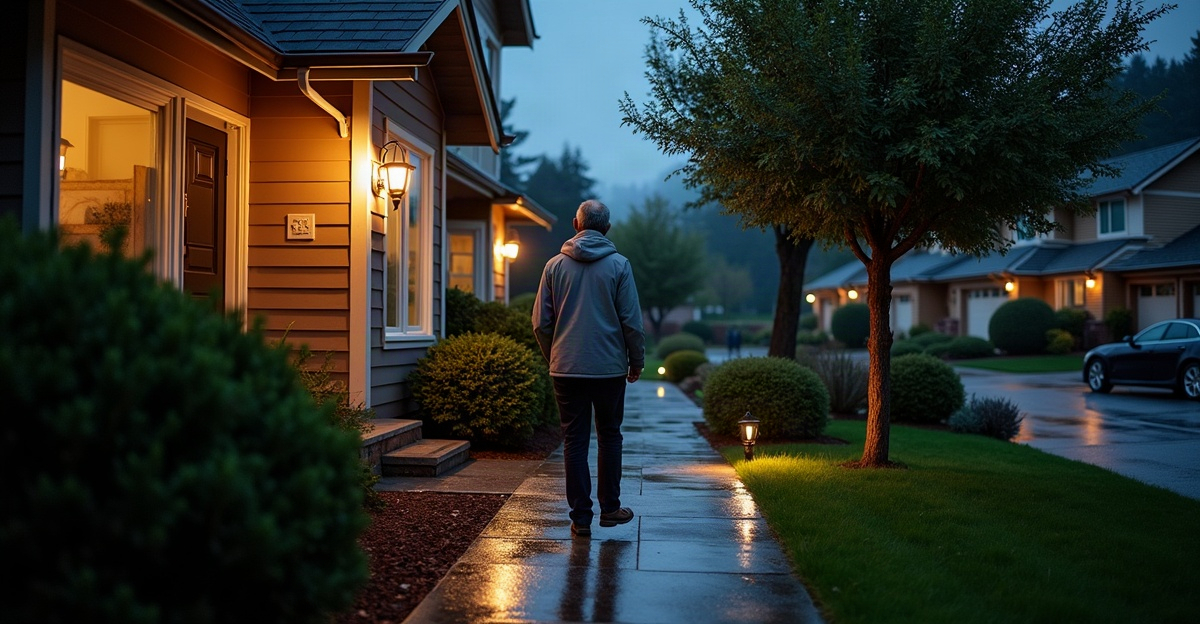
Pathway and step lighting should lead naturally from the sidewalk or driveway to the front door. Low-profile path lights, bollards, recessed step lights, deck lights, railing lights, and downlights from nearby structures or trees can all work well. We use even spacing and clear sightlines instead of adding a fixture at every possible location.
Too many path lights can create a runway effect. Fewer fixtures, placed at stair treads, grade changes, uneven pavement, and route intersections, produce a cleaner look and better visual comfort.
Exterior lighting can improve visibility and help a home appear occupied. It does not guarantee crime prevention, so lighting should be part of a broader home safety plan rather than the only measure.
Use Architectural, Landscape, Soffit, and Roofline Lighting With Restraint
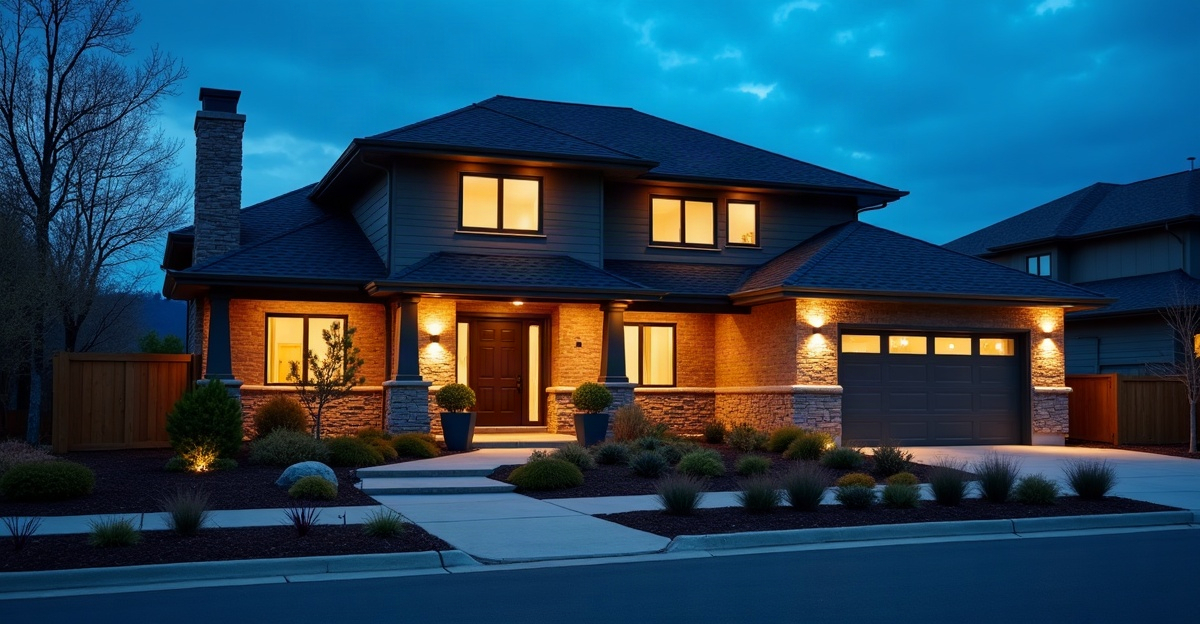
Modern house exterior lighting relies on clean fixture silhouettes, warm white everyday light, controlled beams, subtle contrast, and minimal visual clutter. Hidden light sources often create the most polished effect because attention stays on the home rather than on the hardware.
Architectural outdoor lighting can highlight stonework, columns, entry walls, planting beds, gables, and textured siding. Landscape uplighting can give mature trees and key plantings a dramatic but refined presence. The goal is to select a few focal points, not illuminate every feature across the yard.
Careful aiming matters. An uplight should highlight a tree canopy, wall texture, or architectural feature without spilling into windows, sidewalks, streets, or neighboring properties. Shielded fixtures and downward-facing light reduce direct views of bulbs and LEDs from the street, driveway, and surrounding homes.
Soffit lighting can outline architectural lines while adding subtle ambient illumination near the entry and façade. Roofline lighting can create a crisp, modern profile when the fixtures and wiring remain discreet. Conventional exterior fixtures are commonly wall-mounted, ceiling-mounted, landscape-mounted, or path-mounted. Permanent systems are generally installed along the roofline or soffit for a continuous, low-visibility appearance.
For homes that need architectural emphasis along the eaves, our roofline and soffit lighting service can integrate a clean lighting line without adding visible seasonal cords or clips. Selective landscape lighting can complete the composition by balancing the home with the front yard.
Choose Comfortable Light Levels, Color Temperature, and Smart Controls
Outdoor lighting color temperature describes whether light appears warmer or cooler. It is measured in Kelvin. Warm white light is commonly preferred for everyday residential exteriors because it feels welcoming and works well with most exterior materials.
Lumens for outdoor lighting measure visible brightness. The right level depends on the fixture location, beam spread, mounting height, and intended use. An entry lock needs useful task light, while an accent on a stone wall needs a narrower and often gentler effect. A single Kelvin or lumen target does not fit every front-of-house application.
Dimmable exterior lighting gives us more control over comfort and appearance. A brighter setting may work well for arrivals or outdoor entertaining, while a reduced setting can limit glare during normal evening use.
Smart outdoor lighting controls make it easier to maintain a consistent look without unnecessary overnight operation. Timers and schedules can turn zones on and off at planned times. App controls can adjust colors, brightness, and scenes. Motion sensors can help at side entries, driveways, and other areas where full-time lighting is unnecessary.
Useful scene presets can include everyday white lighting, entertaining, arrivals, holidays, and game days. We recommend warm white settings for routine use, dimming where available, motion sensors where practical, and precise uplight aiming. These choices help reduce glare and light pollution while keeping the property functional.
Where Permanent Outdoor LED Lighting Fits in a Year-Round Design
Permanent outdoor LED lighting is one option within a layered exterior lighting plan. It is not automatically the right answer for every home, but it can be an excellent fit for homeowners who want discreet, app-controlled outdoor lighting along rooflines or soffits.
Permanent Christmas lighting is only one use. A well-planned system can support year-round exterior lighting for everyday curb appeal, safe arrival routes, entertaining, seasonal colors, celebrations, and event themes. Programmable scenes and adjustable zones allow the home to shift from subtle warm white light to more colorful displays without installing and removing seasonal strings.
Potential advantages include reduced annual ladder use for roofline decorating, convenient scheduling, customizable color options, and a more polished appearance throughout the year. System suitability depends on the home’s design, roofline complexity, goals, budget, electrical access, product quality, control features, and installation conditions.
Our permanent outdoor lighting service helps homeowners assess whether an app-controlled roofline system fits their property. We can also explain the installation approach through our lighting process and show completed concepts in our lighting gallery. Permanent lighting Portland and permanent lighting Vancouver projects benefit most from designs that respect each home’s architecture rather than applying one identical pattern everywhere.
Plan for Pacific Northwest Weather and Know When to Hire a Professional
Portland, Oregon, Vancouver, Washington, and nearby communities face frequent rain, moisture exposure, long dark seasons, changing temperatures, and challenging roofline access. Weather-rated outdoor lighting matters in these conditions.
An IP rating for outdoor lights indicates how well a fixture or component is protected against solids and moisture. The appropriate rating depends on where the product will be installed and how exposed it will be. We recommend weather-rated fixtures, corrosion-resistant materials, sealed connections, dependable mounting, and proper installation. Long-term performance depends on both product quality and installation quality.
Professional support is often worthwhile for difficult rooflines, permanent LED systems, hardwired fixtures, electrical access concerns, smart-control setup, and complete design planning. It is also a practical choice for homeowners who want a clean, durable installation without ladder work.
Electrical work and hardwired exterior fixture installation may require a qualified electrician and must comply with applicable local codes. We do not recommend unsafe DIY electrical work.
For common planning questions, warm white is generally the best everyday color temperature for a modern exterior. Front-of-house brightness should be adequate for safe movement and recognition without glare; fixture location and beam control matter as much as output. Modern homes often look best with clean-lined, shielded fixtures and discreet architectural accents.
Permanent LED lights can be worth considering where year-round flexibility, roofline convenience, and app controls match the home’s needs. They can run year-round rather than only during holidays. The proper weather rating varies by exposure, and professional installation is often the preferred choice for permanent systems. Outdoor lighting installation Portland and outdoor lighting installation Vancouver costs vary by home size, roofline complexity, electrical access, system features, fixture quality, smart-control options, and installation needs.
Want to see how permanent outdoor lighting could look on a home? Permanent Lighting PDX can create a customized lighting design mockup for homeowners in Portland, Vancouver, and surrounding areas. Request a permanent outdoor lighting quote to explore a clean, durable, app-controlled lighting solution for everyday curb appeal and seasonal celebrations.