Warm White vs Cool White Outdoor Lighting: Which Is Best?
Warm white vs. cool white outdoor lighting depends on a home’s materials, architectural style, and each illuminated area’s purpose. We use warm tones to create inviting curb appeal for patios, rooflines, and traditional finishes. Neutral or cool tones deliver a cleaner appearance and sharper definition for driveways, paths, and entrances.
Key Takeaways
- Warm white, typically 2200K–3000K, complements brick, wood, warm stone, landscaping, patios, and traditional home styles.
- Neutral white, around 3500K–4000K, provides a balanced choice for mixed-material homes and areas that require visual comfort and clear visibility.
- Cool white, generally 4000K–5000K, works well with modern finishes, garages, driveways, walkways, and other functional zones when we control it properly.
- Fixture placement, beam spread, light output, aiming, and glare control determine brightness and safety more than color temperature alone.
- Adjustable permanent LED lighting lets us use warmer decorative light and cooler, visibility-focused light in separate zones.
Warm White vs Cool White Outdoor Lighting: The Best Choice Depends on the Home
Warm white is usually best for a cozy, welcoming architectural look, while cool white can work well where crisp visibility and a modern appearance are the priority. In warm white vs cool white outdoor lighting, there is not one universal winner.
We recommend choosing a white tone based on exterior materials, architecture, lighting purpose, nearby ambient light, neighborhood character, and personal preference. A brick craftsman, a modern home with black metal trim, and a driveway that needs clearer nighttime definition may all call for different settings.
Color temperature describes the appearance of white light. It is measured in Kelvin, or K, and manufacturer labels can vary slightly.
| Light tone | Typical Kelvin range | Appearance | Best uses | Potential drawback |
|---|---|---|---|---|
| Warm white | 2200K–3000K | Soft, golden, and inviting | Rooflines, patios, landscaping, architectural accents, and year-round curb appeal | May feel less crisp in task-oriented areas |
| Neutral white | 3500K–4000K | Balanced and clean | Mixed-material homes, entries, paths, garages, and modern-traditional transitions | Can lack the warmth of lower-Kelvin lighting |
| Cool white | 4000K–5000K | Crisp, clean, and sometimes subtly bluish | Driveways, walkways, entrances, garages, and work areas | Can look stark around patios or traditional facades |
Warm white commonly falls between approximately 2200K and 3000K. It creates a soft amber or golden effect. Neutral white, generally around 3500K to 4000K, offers a cleaner appearance without looking overly cool. Cool white commonly ranges from approximately 4000K to 5000K and has a crisper cast.
Cool white is not simply “blue light.” Quality fixtures at moderate cool-white settings generally look white with a cooler edge. Its appearance changes with the fixture, siding color, rain, landscaping, dark skies, and surrounding light sources.
For controls, we favor dimming, scheduling, and zone-based settings. These features let us keep decorative areas warm while using a cleaner white where visibility matters most.
Choose Warm White for Welcoming Curb Appeal and Traditional Materials
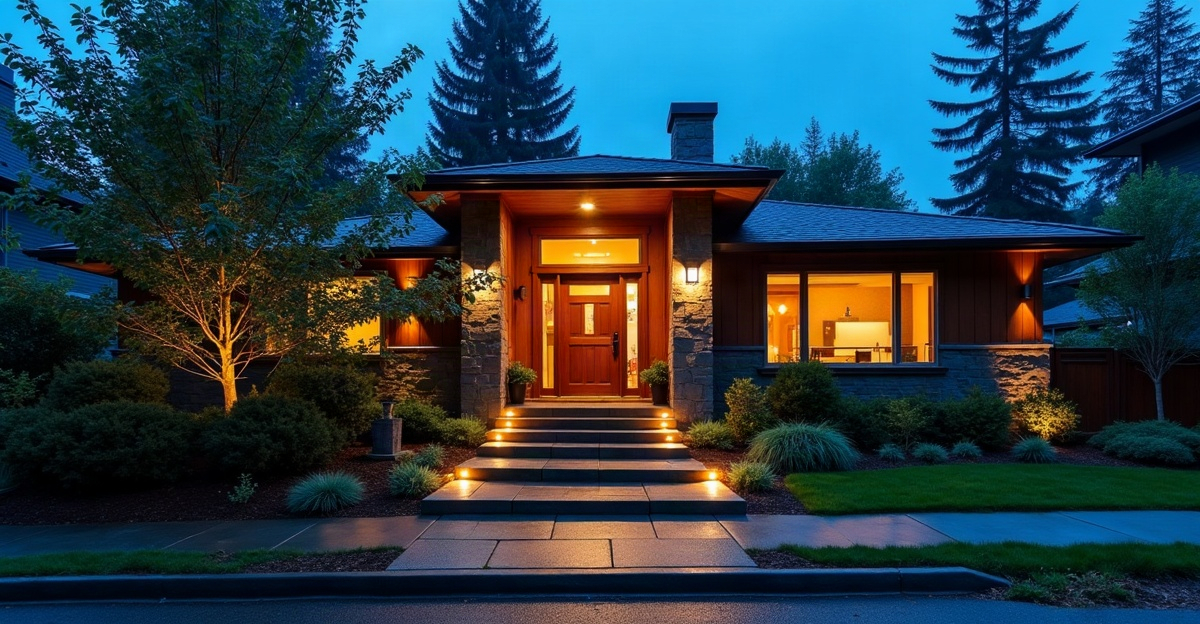
Choose warm white if the home features brick, wood, warm-toned stone, copper, tan siding, or traditional architectural details. It is also a strong choice where the goal is relaxed patio lighting, subtle landscape accents, or polished year-round architectural definition.
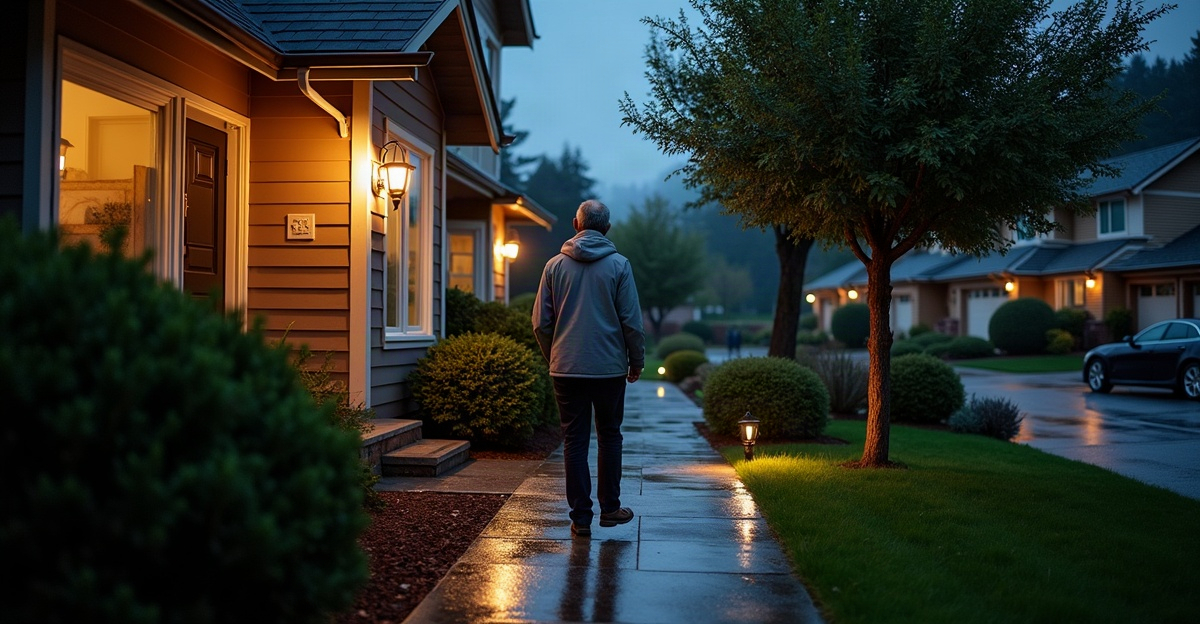
Warm white may be a better fit when the goal is to make the home feel comfortable, polished, and welcoming rather than bright or highly contemporary. During Portland–Vancouver’s long, dark fall and winter evenings, this softer tone can make arriving home feel more inviting without overwhelming the exterior.
Red brick and warm stone respond especially well to warmer light. The tone supports their natural earthy colors and surface texture instead of creating a harsh contrast. Wood siding and timber details also benefit because warm white helps reveal grain and natural finishes.
Landscaping often looks more relaxed under warm lighting. Trees, evergreen foliage, garden beds, patios, decks, and seating spaces gain depth while maintaining a residential feel. Warm white also works beautifully along rooflines, soffits, and eaves where the goal is refined architectural curb appeal.
A side-by-side design rendering makes this difference easy to see before installation. For a project gallery image, descriptive alt text such as “warm white vs cool white outdoor lighting on a Portland home exterior” clearly identifies the comparison.
Warm white does have tradeoffs. It may not deliver the high-contrast, sharply defined effect that some contemporary homes need. It can also feel less effective than neutral or cool white in areas used for detailed tasks or clearer route visibility.
Choose Cool or Neutral White for Modern Style and Clearer Visibility
Choose cool or neutral white if the home has contemporary architecture, gray finishes, white siding, black metal accents, or modern stone. These tones can also suit driveways, entries, garages, paths, and work areas where a clean visual effect and clearer visibility are important.
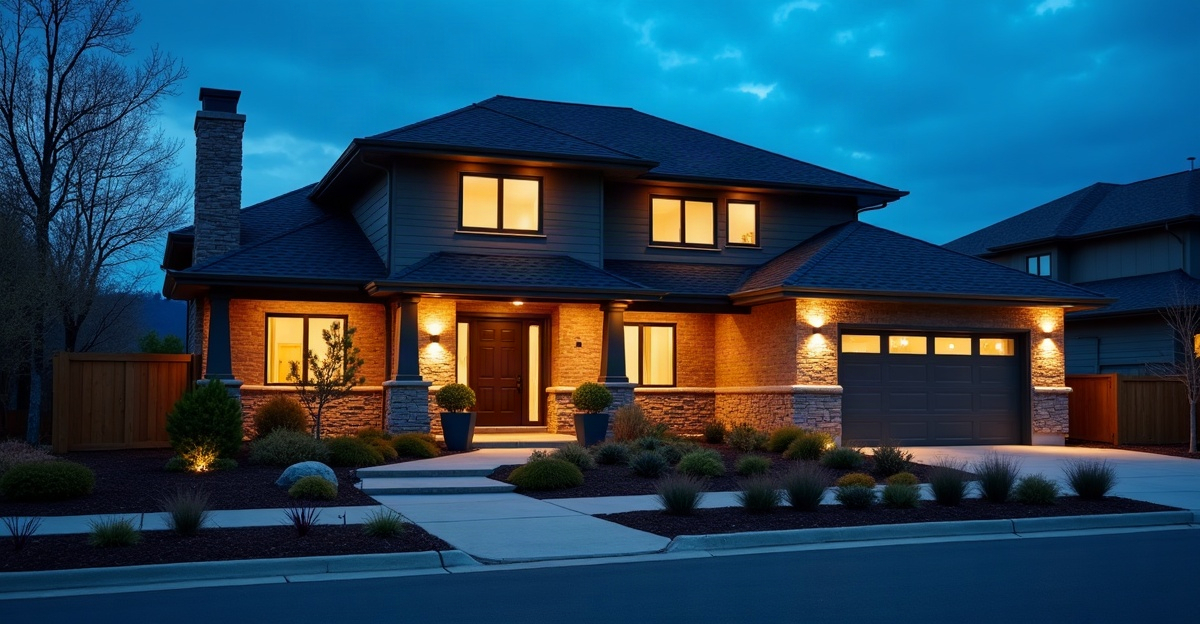
Cool white vs warm white for outdoor lighting often comes down to purpose. Cool white can make white siding look fresh and define clean architectural lines. Gray and black exterior finishes often pair naturally with neutral-to-cooler lighting, especially on modern homes with metal, glass, or simple geometric forms.
Neutral white provides an effective middle ground. It works well for homes that blend natural wood or stone with white siding, charcoal trim, or black hardware. At approximately 3500K to 4000K, neutral white can feel clean without pushing the exterior into a stark blue-white appearance.
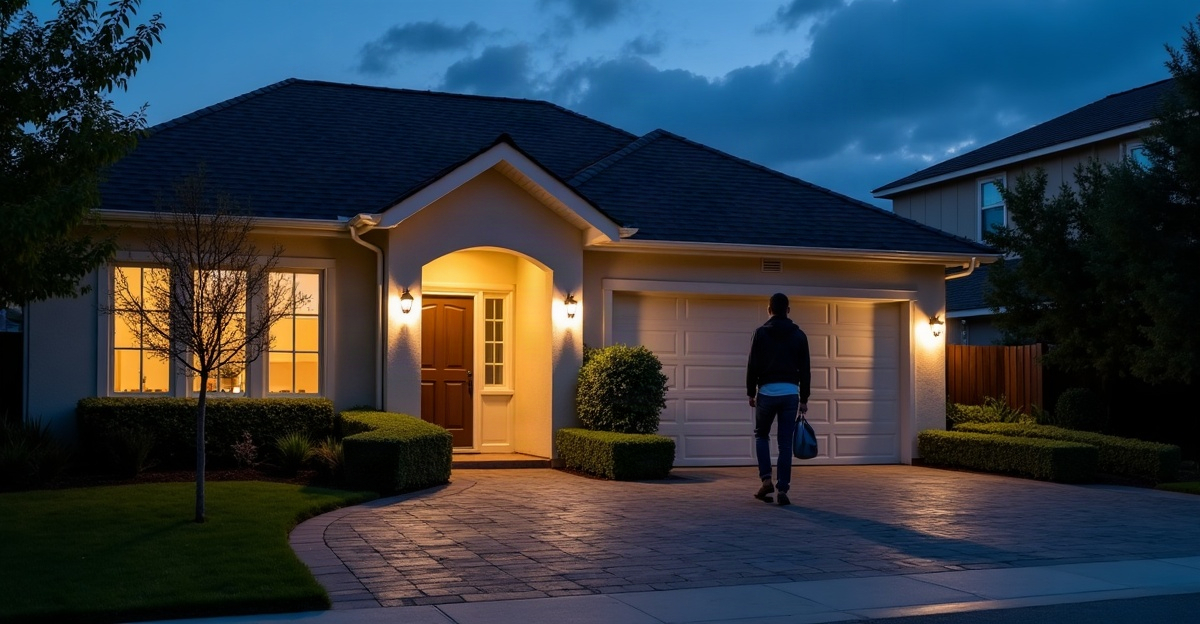
For paths, steps, driveways, garages, and entrances, a neutral or cooler tone may help create a more visibility-focused result. Still, the Kelvin rating alone does not make an area safer. Proper fixture placement, output, beam spread, and glare control are also essential.
A simple design scale helps clarify the applications:
- 2200K–3000K: Warm architectural accents and patios
- 3500K–4000K: A bridge between decorative and practical uses
- 4000K–5000K: Crisp, modern, visibility-focused zones
Cool white can feel severe if it is too bright, poorly aimed, or used across every part of a traditional home. It may make a patio, landscaped gathering area, or warm stone facade feel less comfortable. We often reserve cooler settings for practical zones rather than applying them across the entire property.
Brightness, Safety, and Lighting Design Matter More Than Color Temperature Alone
Color temperature affects the character of the light. Brightness depends on lumens, fixture output, beam angle, mounting height, placement, dimming, and aiming. Cool white may appear brighter to our eyes, but it does not inherently produce more light than warm white.
We should never treat warm white as dim or cool white as automatically brighter. A properly placed warm-white fixture can illuminate an entry effectively, while an overly bright cool fixture can create glare and reduce visual comfort.
Color temperature also does not determine LED energy efficiency or lifespan on its own. Product quality, operating conditions, weather resistance, installation, and controls have a greater effect on long-term performance.
We recommend separating decorative needs from task and security needs. Warm white often suits rooflines, landscape features, patios, and architectural details. Neutral-to-cooler white can make sense near entrances, walkways, driveways, garages, and work areas.
A balanced lighting plan uses layers rather than one bright source. Prioritize even illumination across paths and steps instead of creating intense hotspots. Aim fixtures downward and away from windows and nearby homes. Shielding, appropriate mounting, dimmers, timers, schedules, and motion sensors all help manage glare and light trespass.
Good outdoor lighting should improve safety and appearance without shining into neighboring windows or overpowering the street. A thoughtful exterior lighting design helps balance curb appeal, visibility, and neighborhood fit.
Plan Outdoor Lighting for Portland–Vancouver’s Dark, Wet Seasons
Frequent rain, overcast skies, early sunsets, and long wet seasons make intentional exterior lighting especially valuable across Portland, Oregon, Vancouver, Washington, and nearby Pacific Northwest communities. A well-planned system can support welcoming arrivals, safer walking routes, and a more visible home exterior after dark.
Each area of the property benefits from a clear purpose. Rooflines and soffits create architectural definition and year-round curb appeal. Pathways and steps need even illumination for easier walking. Driveways and garages benefit from better visibility when arriving home at night.
Patios and decks usually call for a warmer, more comfortable atmosphere. Landscaping, trees, and evergreen foliage often look best with subtle accents that add depth without excessive brightness. These goals can be combined through professional landscape lighting and carefully planned roofline or soffit illumination.
Screens and product photos cannot fully show how lighting will look against wet pavement, dark skies, evergreen foliage, and specific siding colors. We recommend reviewing side-by-side renderings or a design mockup in conditions that reflect the actual property before choosing a permanent installation.
Adjustable Permanent LED Lighting Provides Year-Round Flexibility
Programmable permanent LED lighting gives homeowners flexibility without requiring a single white tone across the entire home. Adjustable white settings and color controls can support warm white for everyday curb appeal, neutral or cooler white for visibility-focused needs, and festive colors for holidays or special events.
This approach can reduce the need to reinstall seasonal lighting whenever the desired look changes. Warm white may work best along rooflines, landscaping, patios, and decorative architectural accents. Neutral or cooler tones can serve driveways, walkways, entrances, garages, and other task-oriented locations.
Product-specific details such as weather ratings, energy use, lifespan, warranties, app controls, and installation methods should always be verified against the selected Permanent Lighting PDX system and manufacturer documentation. The available controls will determine how precisely white tones can be adjusted by zone and schedule.
For a flexible, polished installation, explore our permanent outdoor lighting options. We can also create a design concept that shows the home in warm, neutral, and cool-white settings before finalizing the plan. Request a free lighting design mockup to compare the look that best fits the property.
Common Questions Homeowners Ask Before Choosing a White Light Tone
Is warm white or cool white better for outdoor lighting?
Warm white is often best for cozy curb appeal, patios, landscape accents, and decorative architectural lighting. Cool or neutral white can work better where a crisp appearance and clearer visibility are priorities. The best result often combines tones by area instead of using one setting everywhere.
What Kelvin setting works best for exterior lighting?
Approximately 2200K to 3000K is commonly used for warm, welcoming exterior lighting. A 3500K to 4000K setting offers a balanced neutral appearance. A 4000K to 5000K setting creates a crisper cool-white look.
For a direct 3000K versus 4000K comparison, 3000K often suits warm materials, traditional homes, patios, and landscape accents. A 4000K setting can suit contemporary designs, driveways, entries, and visibility-focused areas.
Cool white may appear brighter, but actual brightness depends on fixture output, lumens, beam spread, mounting height, placement, dimming, and aiming. For driveways and pathways, neutral-to-cooler light can help visibility, but even spacing, downward aiming, suitable output, and glare control matter just as much.
Warm white can also work beautifully with a modern home when the goal is a softer result. Neutral white provides a useful bridge between welcoming architectural appeal and contemporary finishes.